Forget the flying. The Roadster's biggest secret is the motor and battery you can't see.
Everyone is talking about the thrusters. But the thrusters only run for about five seconds. Everything else the new Tesla Roadster does, every mile, every corner, every launch on its wheels alone, comes from two motors and one battery. And Tesla says both are the best it has ever built.
Tesla's engineering boss Lars Moravy put it simply in a long interview with Hagerty: the battery is "everything we learned at Tesla for 20+ years making electric vehicles put into one" (InsideEVs). He walks through all of it here:
Hagerty's Henry Catchpole with Tesla's Lars Moravy: the motors, the battery, the fans and the thrusters, explained by the engineer who built them. Video: Hagerty on YouTube. Tap to play.
All four are Tesla's own numbers, from interviews with Hagerty and Top Gear (Tesla North, InsideEVs, EVXL). Nobody outside Tesla has tested them yet.
Two motors that beat three
The Model S Plaid, Tesla's fastest car until now, needed three motors to make about 1,020 horsepower. The new Roadster gets more than that from two, both at the back. Moravy says the pair "has more torque and power than a Plaid" (Tesla North).
A sign Tesla put up at the reveal called it "our most powerful and compact rear-wheel drive unit yet," with about a third more power than the Plaid's at half the weight (EVXL, Not a Tesla App). Tesla didn't print the actual weights, so "half" can't be checked yet. MotorTrend was told slightly different numbers, about 1,500 horsepower, so the final figures may still move.
One motor for each back wheel, and no differential. Here's why that matters. When a car turns, the outside wheel has to roll farther than the inside wheel, like the outside runner on a curved track. Normal cars handle that with a box of gears called a differential that lets the two wheels spin at different speeds. The Roadster skips it. Each back wheel gets its own motor, its own electronics and its own set of gears (it slows the motor down 8.4 times, trading speed for push). So the computer just spins the outside wheel a little faster. It can also push one wheel harder than the other to help swing the car into a corner. Engineers call that torque vectoring (Tesla North, Not a Tesla App).
Why no front motor? The 2017 Roadster promised three motors and all-wheel drive. The new one doesn't need front motors to grab the road, because its fans suck the whole car down instead. How the fans work →
The carbon-wrapped motor: what's true
You may have heard that Tesla built a motor wrapped in carbon fiber. That's real, and it's one of the cleverest things Tesla has done. But it started with the Plaid, not the Roadster.
Think about a muddy bike wheel. Spin it fast and the mud flies off. The spinning part inside an electric motor, called the rotor, has the same problem: spin it fast enough and its own metal tries to stretch outward and pull apart. In 2021, Tesla wound carbon-fiber thread around the Plaid's rotor, pulled very tight, like a super-strong rubber band squeezing it together. That lets the rotor spin faster, up to about 20,000 turns a minute, which is more than 330 spins every second, and it makes the motor's magnetic push stronger (MotorBiscuit via Yahoo). Musk called it "arguably the most advanced motor on Earth." He said at the Plaid launch that it was, as far as Tesla knew, the first production electric motor built this way (CleanTechnica). Tesla even had to build its own machine to do the winding.
Then he added: "We have a few ideas for increasing torque & max rpm even further for new Roadster" (Musk on X, via Teslarati).
So is the Roadster's motor the carbon-wrapped kind, pushed even further? Tesla hasn't said. What it has said is that the new drive unit is smaller and stronger than the Plaid's. Getting more power out of a smaller motor usually means spinning it faster, and that's exactly what the carbon wrap was invented for. But until Tesla confirms it, that's our educated guess, not a fact.
A battery built for power, not just distance
The battery is made of thousands of round cells Tesla makes itself, called 4680s. The name is just the size: 46 millimeters wide and 80 millimeters tall, a little wider than a golf ball and about 3 inches tall.
But these aren't the same 4680s found in other Teslas. Moravy explains the difference this way: batteries for a Model 3 or Model Y are tuned to last for many years of commuting. The Roadster's are tuned to dump a huge amount of power all at once, and soak it back in fast. He calls it a "bespoke chemistry for high power throughput," still lithium and nickel inside (InsideEVs).
What's new, in plain words:
- Aluminum cans instead of steel. Each cell's outer shell is aluminum, which is lighter and lets heat escape faster. Pushing a megawatt makes cells hot, quickly.
- Cooling on both sides. Tubes of coolant touch every cell from two sides, like holding a hot mug with both hands in cold water.
- A titanium lid. The top of the battery is a titanium plate, thinner and lighter than steel. The bottom, which faces the road, stays aluminum to take bumps and dents.
- About 800 volts. Higher voltage moves the same power with less heat in the wires, the same idea as the Cybertruck and Tesla's Semi truck (EV Wire).
What you get: over 300 miles of range (Tesla's engineers say 310 to 320 in normal driving), and charging from about 15% to about 80% in roughly 10 minutes, which would make it the fastest-charging car Tesla has ever made. On a racetrack, Tesla expects 25 to 30 minutes of all-out driving per charge. Tesla hasn't said how big the battery is, and the charging numbers are targets, not tests (InsideEVs, EV Wire).
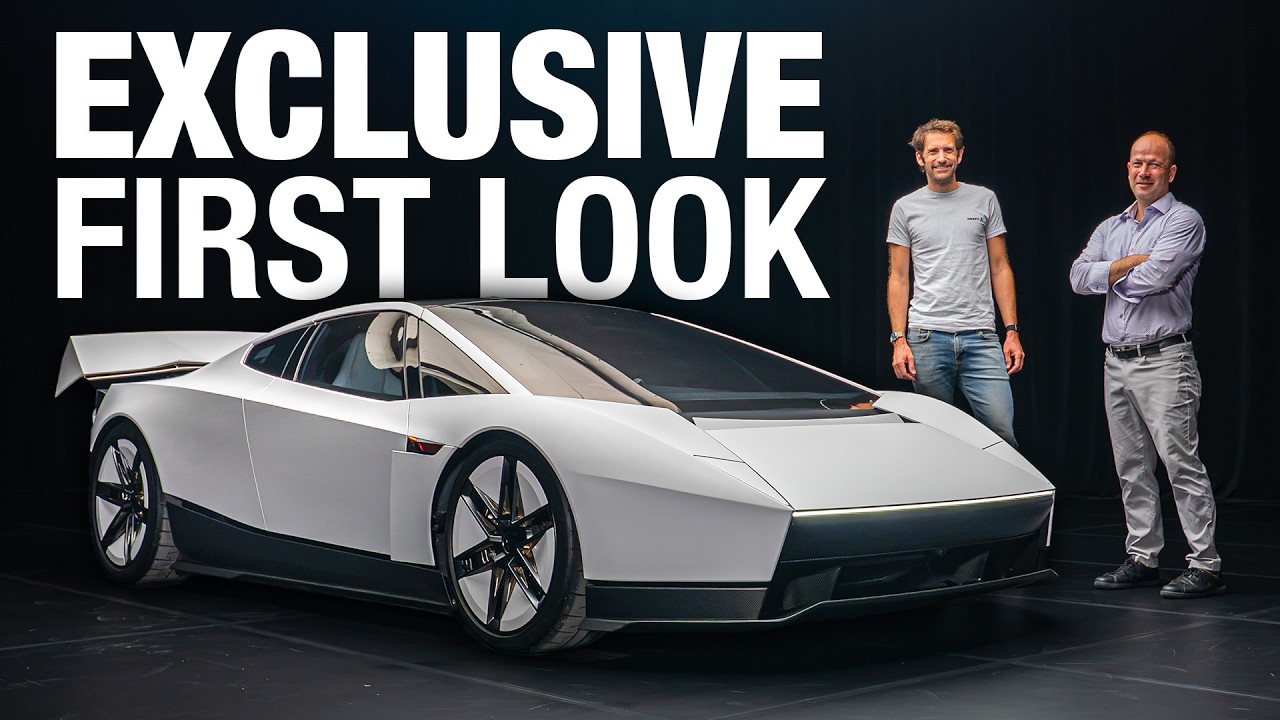
Top Gear got the same engineers to explain the battery and drivetrain:
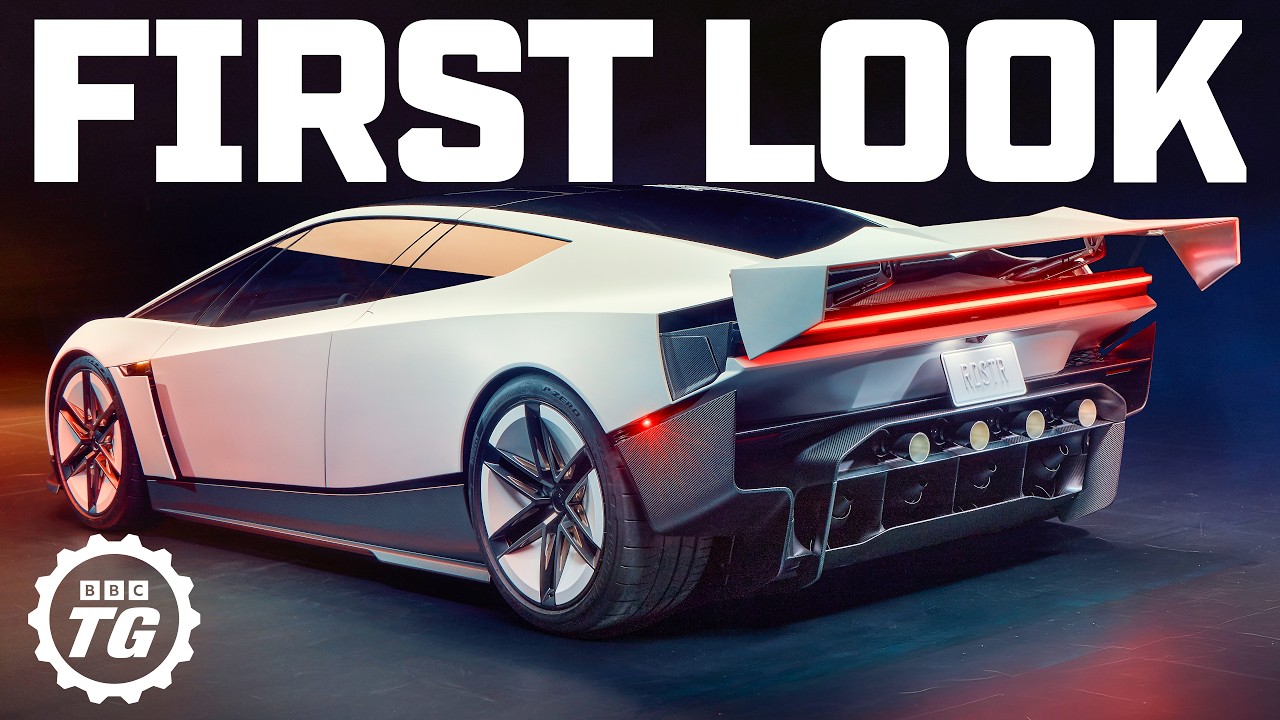
Top Gear's Tom Ford with Tesla's designer Franz von Holzhausen and engineer Lars Moravy. Video: Top Gear on YouTube. Tap to play.